
Water Damage Restoration in Grand Prairie, TX
- Crews answering Grand Prairie calls 24/7
- Licensed, insured, IICRC-certified technicians
- We log the loss and bill your carrier for you
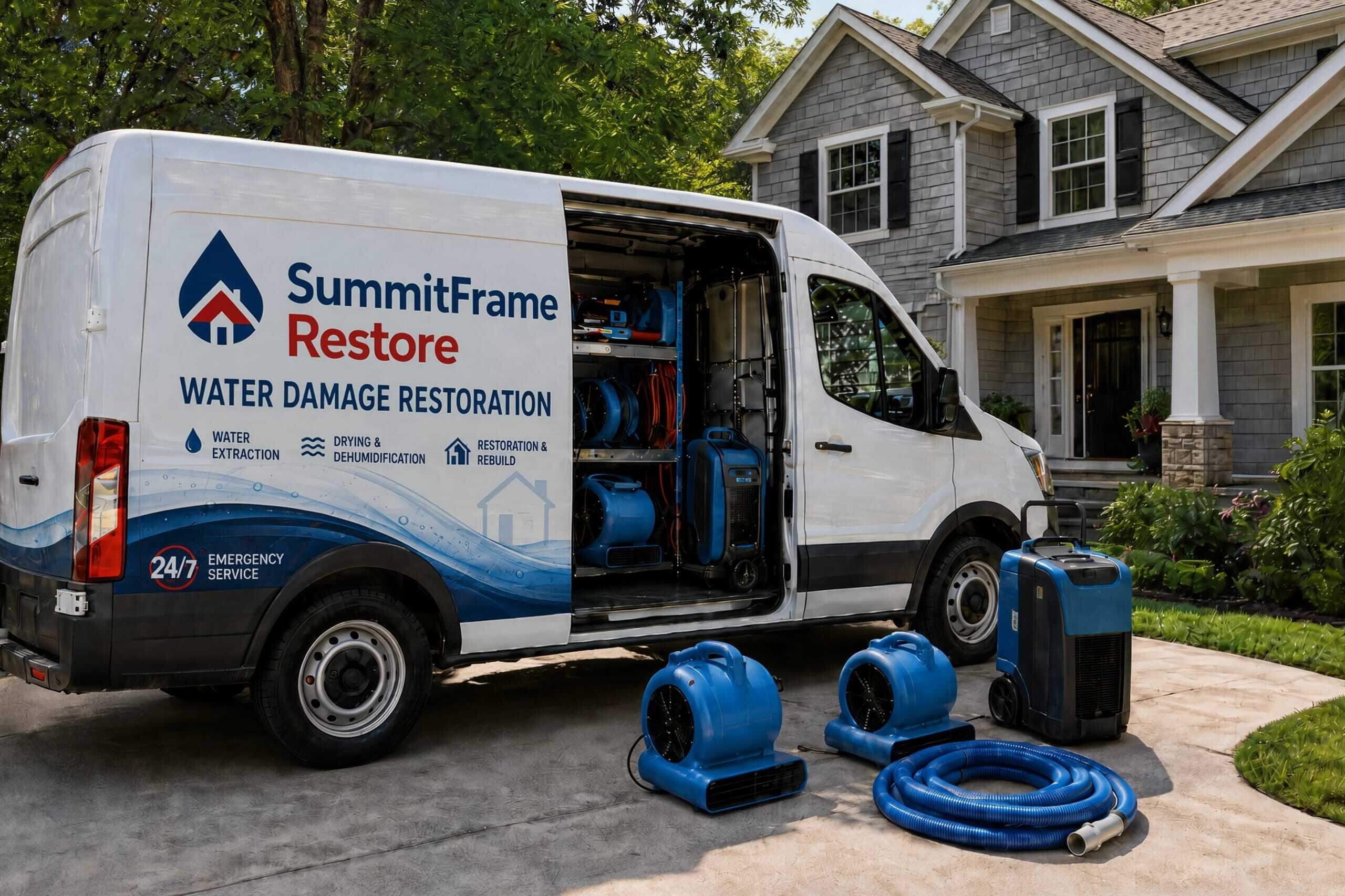
Credentialed & on call in Grand Prairie


From Extraction to Rebuild, Handled by One Crew
Grand Prairie occupies the geographic center of the DFW Metroplex — split between Dallas and Tarrant counties, bordered by I-30, I-20, and SH-360, with a housing stock that ranges from 1950s Veterans Park bungalows to 2010s Tarrant County infill near Mountain Creek Lake. That central location means Grand Prairie sits in the convergence zone for storms tracking from either direction, and its mix of clay soil across both county zones drives the same slab-leak risk that affects all of DFW's older residential neighborhoods. SummitFrame Restore dispatches to Grand Prairie via I-30 West — IICRC-certified water damage crews, verified drying, direct insurance billing.
- Round-the-clock water cleanup, extraction, and structural drying
- Mold control through finished repair, all in-house
- We bill the carrier and manage the claim file
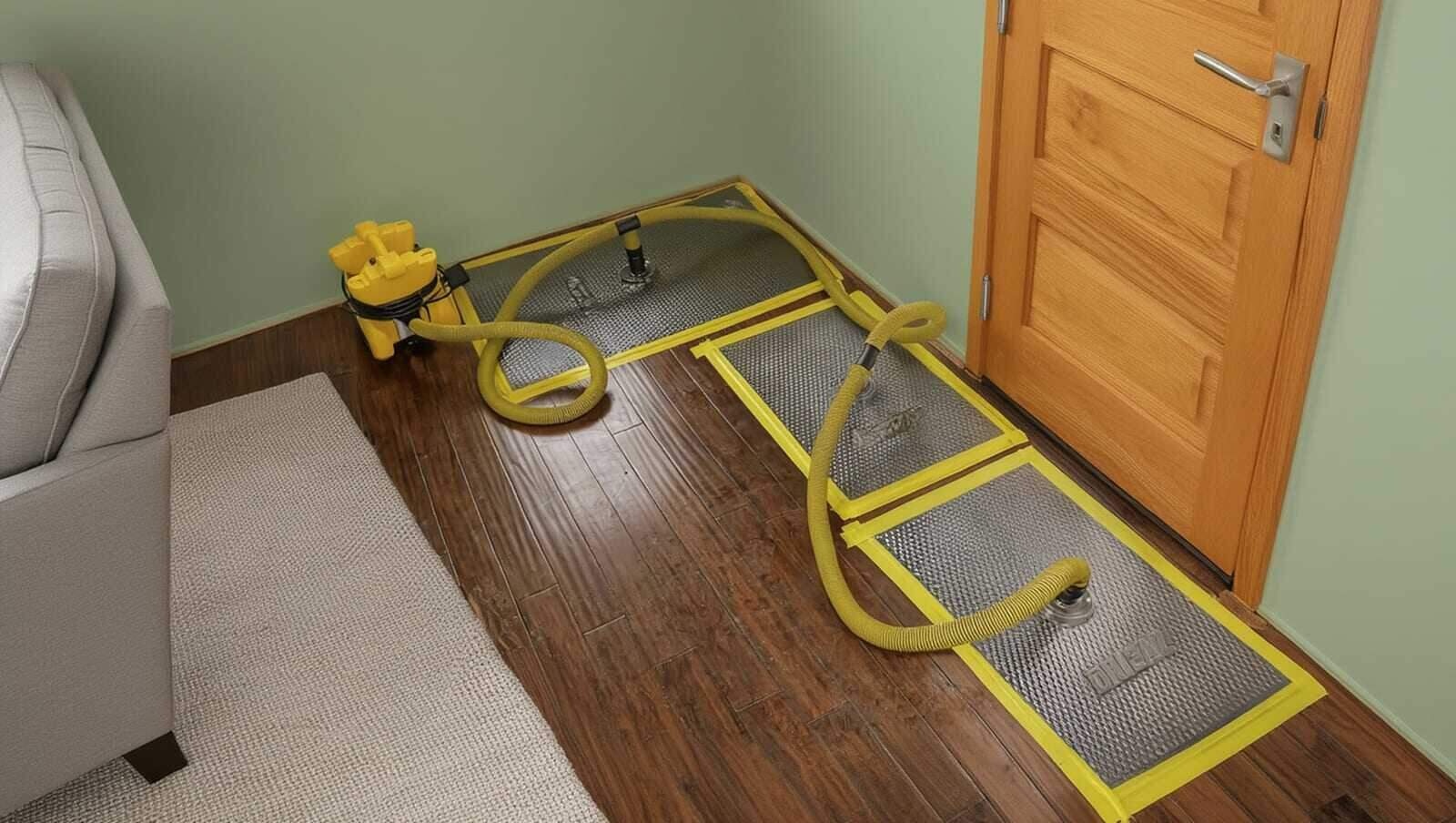
The Restoration Work We Cover in Grand Prairie
Emergency Water Damage
A crew on the way the same day for burst pipes, overflowing appliances, and storm roof leaks.
Water Removal & Extraction
Truck-mounted pumps clear standing water, then we dry the structure to a verified standard.
Mold Removal
Certified remediation with sealed containment and HEPA air scrubbing, source fixed too.
Roof Water Damage
After hail or a storm leak: tarping, interior drying, ceiling repair, and mold headed off.
Ceiling Water Damage
Stained, bulging, or dripping ceilings dried out, patched, and repainted to match.
Burst & Frozen Pipe
Fast turnaround on pipe failures: extraction, structural dry-out, and repair lined up.
What Drives Water Damage in Grand Prairie Homes
Grand Prairie's central Metroplex position and four decades of housing create a varied water-damage picture:
Slab leaks across mid-century neighborhoods
Grand Prairie's older residential zones — Veterans Park, Dalworth Park, and the sections near downtown Grand Prairie — have copper supply lines installed in the 1950s through 1970s. Dallas and Tarrant County clay movement stresses these pipes at joints; a slow slab leak in these neighborhoods can saturate hardwood and carpet pads for days before showing on the surface.
Urban runoff and storm drainage overload
Grand Prairie's dense urban footprint between two interstates creates significant impervious surface area. Heavy North Texas storm events push stormwater faster than Grand Prairie's drainage infrastructure can handle it, with ground-level entries in low-lying sections near I-30 particularly vulnerable.
Spring hail from converging storm tracks
Positioned between Dallas and Fort Worth, Grand Prairie sits in an area where spring storm tracks from different directions converge. The city sees multiple hail events per season — large-footprint roofs on 1970s-era ranch homes are the most vulnerable stock.
Burst pipes in underinsulated older homes
Grand Prairie's older homes have less pipe insulation in exterior walls than post-2000 construction. Winter Storm Uri (February 2021) hit mid-century Grand Prairie neighborhoods with burst pipe losses comparable to what occurred in Carrollton and Irving.
How Fast We Reach Grand Prairie
From northwest Dallas, I-30 West reaches Grand Prairie in roughly 25-35 minutes depending on traffic. SH-183 provides an alternate route through Irving. We dispatch immediately for emergencies, call ahead with a real ETA, and arrive with extraction and drying equipment ready to work from visit one.
Where We Work in Grand Prairie
We serve all of Grand Prairie — from the older Dallas County neighborhoods near Veterans Park and Dalworth Park to the Tarrant County sections near Mountain Creek Lake, Epic Waters, and the SH-360 corridor. Neighboring Irving, Arlington, and Mansfield are also within our service range.
Working Your Grand Prairie Insurance Claim
Standard Texas homeowner policies cover sudden internal water damage — slab leaks, pipe bursts, appliance failures — and hail-damaged roof intrusion is a covered peril in both Dallas and Tarrant County policies, subject to a wind/hail deductible. Grand Prairie's split-county location doesn't affect coverage terms; your policy jurisdiction is the policy issuer, not the county. SummitFrame Restore documents the loss from the first hour and bills your carrier directly for covered work. See our Texas insurance claims guide.
Frequently Asked Questions
Is Grand Prairie in Dallas County or Tarrant County for insurance purposes?
Grand Prairie spans both — different sections of the city fall in different counties. For insurance purposes, your county location doesn't determine coverage terms; that's set by your policy. We serve all Grand Prairie zip codes and document losses to the same standard regardless of which county your property is in.
How quickly can you reach Grand Prairie?
I-30 West from northwest Dallas puts most of Grand Prairie 25-35 minutes away. We dispatch immediately for active emergencies and give you a real ETA when you call.
My home near I-30 got water in during a storm — is that covered?
If water entered because a storm damaged your roof or broke a window, that's typically covered under your homeowner policy. If stormwater entered through overwhelmed drainage or came up through the floor slab from outside, that's classified as flood damage and requires separate flood coverage. We identify the entry point on arrival to make sure you file the correct claim.
What Sets SummitFrame Restore Apart
You reach our Dallas team directly, and a truck reaches most of the DFW metro within hours.
IICRC-trained techs work to insurer benchmarks and log moisture readings from hour one.
The adjuster coordination and paperwork are on us, not on you.
The same team runs the cleanup, dries the structure, and rebuilds it, with no handoff stall in between.
Water Damage in Grand Prairie? Call Us Any Hour.
Central Metroplex location, fast response from northwest Dallas via I-30. Our crew reaches Grand Prairie in 25-35 minutes — available 24/7.
Call Now: (469) 895-7900