
Structural Drying & Dehumidification in Dallas, TX
Dry to the touch is not dry. SummitFrame Restore maps the moisture, sets commercial air movers and dehumidifiers, and tracks readings every day until the framing, subfloor, and wall cavities hit a verified dry standard — the part of restoration that prevents the warping, rot, and mold a quick mop never stops.
- Moisture mapping & thermal imaging
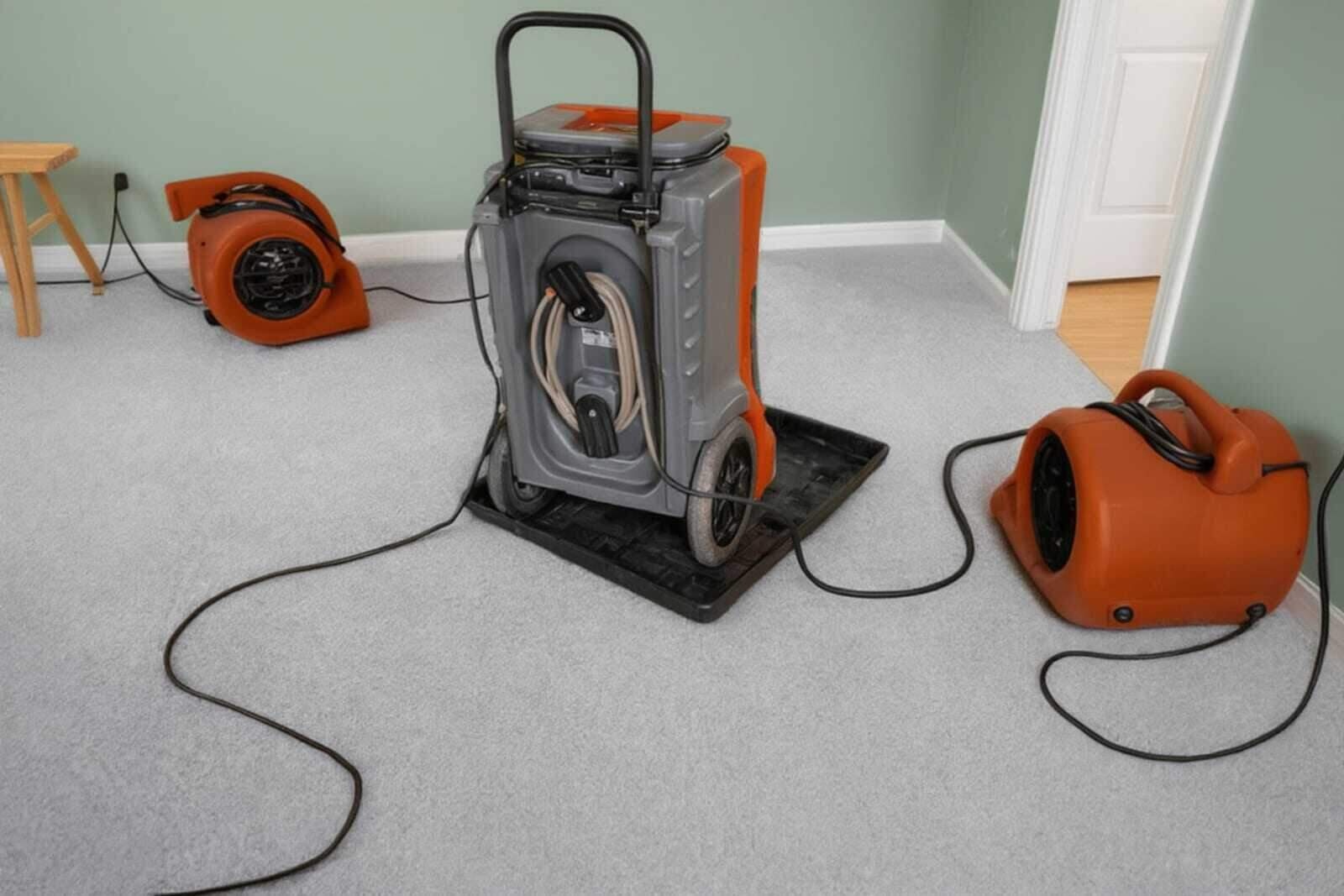
- Commercial air movers & dehumidifiers
- Daily readings, logged for your insurer
What Working With SummitFrame Restore Looks Like
Your call reaches our Regal Row base, never an out-of-state answering service. We roll a crew to most of the metro the same day.
Active IICRC certification, work that meets what manufacturers and insurers expect, and moisture logs that start within the first hour on site.
We deal with the adjuster and carry the paperwork — including the separate wind and hail deductible that catches so many Texas homeowners off guard.
The same outfit that extracts and dries your home also rebuilds it — no waiting on a separate contractor and no gap where the job stalls.
Why Proper Structural Drying Matters
Pulling out the standing water is the visible half of a water loss. The half that decides whether your home is fine in six months is structural drying — getting the moisture out of the materials water soaked into. Wood framing, subfloor, drywall, and insulation hold water long after the surface feels dry, and that trapped moisture is what causes the slow damage: hardwood that cups and crowns weeks later, drywall that stays soft, framing that rots, and mold that starts in the wall cavity where no one looks.
In a slab-on-grade Dallas home, this matters even more, because water spreads flat across the floor and pushes into the bottom plates of walls instead of draining away. SummitFrame Restore dries the structure deliberately, not just until it looks done. We dry to a documented standard — the moisture content of the materials brought back to where it should be — so you can rebuild with confidence and your insurer has the readings to back the claim. Drying is also where mold gets stopped: get the structure to a dry standard fast and mold never gets the moisture it needs.
The concrete slab itself adds a wrinkle most homeowners never think about. Concrete holds moisture and gives it up slowly, so a slab that took on water from a leak can keep a wall plate or the underside of flooring damp for days after the surface looks dry. We account for that by reading the slab and the materials sitting on it, not assuming a dry-feeling floor means a dry structure. It's the difference between a drying job that's actually finished and one that quietly leaves moisture behind to cause trouble in a month — warped flooring, soft drywall, or mold in a wall cavity nobody opened.
Moisture Mapping & Water Damage Monitoring
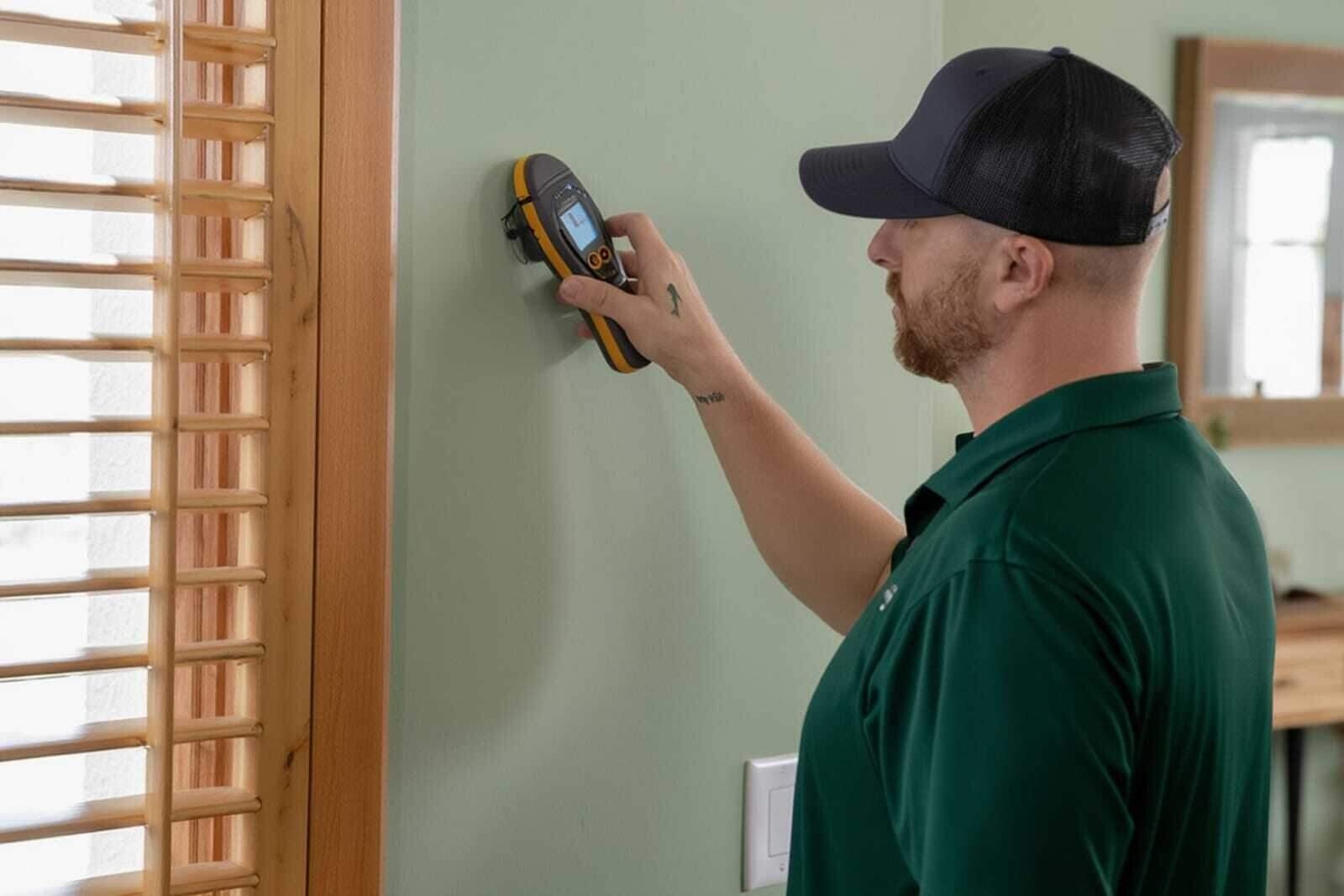
You can't dry what you can't find. Before any equipment goes down, we map the moisture — which surfaces are wet, how far the water traveled, and how deep it soaked. This is the step that separates a real drying job from a couple of rented fans, and it's how we make sure nothing wet gets sealed up inside a wall to rot or grow mold later.
- Pin & Pinless Meters
- Calibrated moisture meters read the actual moisture content of wood, drywall, and concrete — surface and deep — so we know what's truly wet, not just what feels damp.
- Thermal Imaging
- An infrared camera reveals the cool, wet areas behind walls and under floors that meters then confirm — finding water that's spread well past the visible edge.
- Mapping the Wet Area
- We chart the full footprint of the water so the drying plan covers every wet material, including the ones you'd never see.
- Daily Monitoring
- We re-read the same points every day and log the numbers. Drying is finished when the readings say so, not when the calendar does.
Our Drying Equipment & Methods
Drying is a balance of air movement, dehumidification, and temperature, and the right mix depends on the materials and how wet they are. We bring commercial equipment built for the job, not the box-store fans and household dehumidifier that won't move the moisture a structure holds:
Air Movers
High-velocity air movers sweep moisture off surfaces into the air, placed to create circulation across every wet material.
LGR Dehumidifiers
Low-grain-refrigerant dehumidifiers pull that moisture out of the air and drain it away, so it can't re-settle into materials.
Targeted Drying
Wall-cavity ventilation, drying mats, and specialty tools reach water trapped inside walls, under hardwood, and in tight spaces.
Verify & Document
Daily readings continue until materials hit the dry standard, and the log goes to your adjuster.
Structural drying is the bridge between water removal and rebuilding — and the step that keeps mold from ever starting. A typical home dries in three to five days, though a slab leak that soaked hardwood for a week before anyone noticed takes longer than a clean, freshly caught burst pipe. Not sure whether the wall behind a fixed leak is actually dry? Call our Dallas team and we'll put a meter on it.
Frequently Asked Questions
How do you know when a structure is fully dry?
By the numbers, not by feel. We record a "dry standard" target for each material — the moisture content it should read once dry, based on unaffected areas of the same home — then take meter readings at the same points every day. When the wet materials reach that target and hold it, the structure is dry and the equipment comes out. Dry to the touch can still mean a soaked wall cavity, which is exactly the moisture that causes warping and mold weeks later.
Why is professional drying better than fans alone?
Household fans push air around a room but don't remove the moisture from it — without a dehumidifier sized for the job, that water just moves into the air and re-settles into other materials. Box fans also can't reach water trapped in wall cavities, under hardwood, or deep in the subfloor. We balance commercial air movers against LGR dehumidifiers, target the hidden water with specialty tools, and verify the result with meters. Fans alone routinely leave enough moisture behind to grow mold and rot framing.
The Credentials Behind the Work


Made Sure the Wall Is Actually Dry? Call Our Dallas Team.
Hidden moisture is what turns a small leak into a big repair. Reach a real person on our Dallas line any time — 24/7 Emergency Response.
Call Now: (469) 895-7900