
Hardwood Floor Water Damage Repair in Dallas, TX
Wood and water fight a losing battle, but speed changes the outcome. SummitFrame Restore dries water-damaged hardwood with specialized floor-mat systems that pull moisture from the boards and subfloor — often saving a floor that looks ruined, if we reach it before the cupping sets permanently.
- Specialized floor-mat drying
- We dry boards & subfloor, not the surface
- Honest save-or-replace call
What Working With SummitFrame Restore Looks Like
Your call reaches our Regal Row base, never an out-of-state answering service. We roll a crew to most of the metro the same day.
Active IICRC certification, work that meets what manufacturers and insurers expect, and moisture logs that start within the first hour on site.
We deal with the adjuster and carry the paperwork — including the separate wind and hail deductible that catches so many Texas homeowners off guard.
The same outfit that extracts and dries your home also rebuilds it — no waiting on a separate contractor and no gap where the job stalls.
Cupping, Buckling & Warping Explained
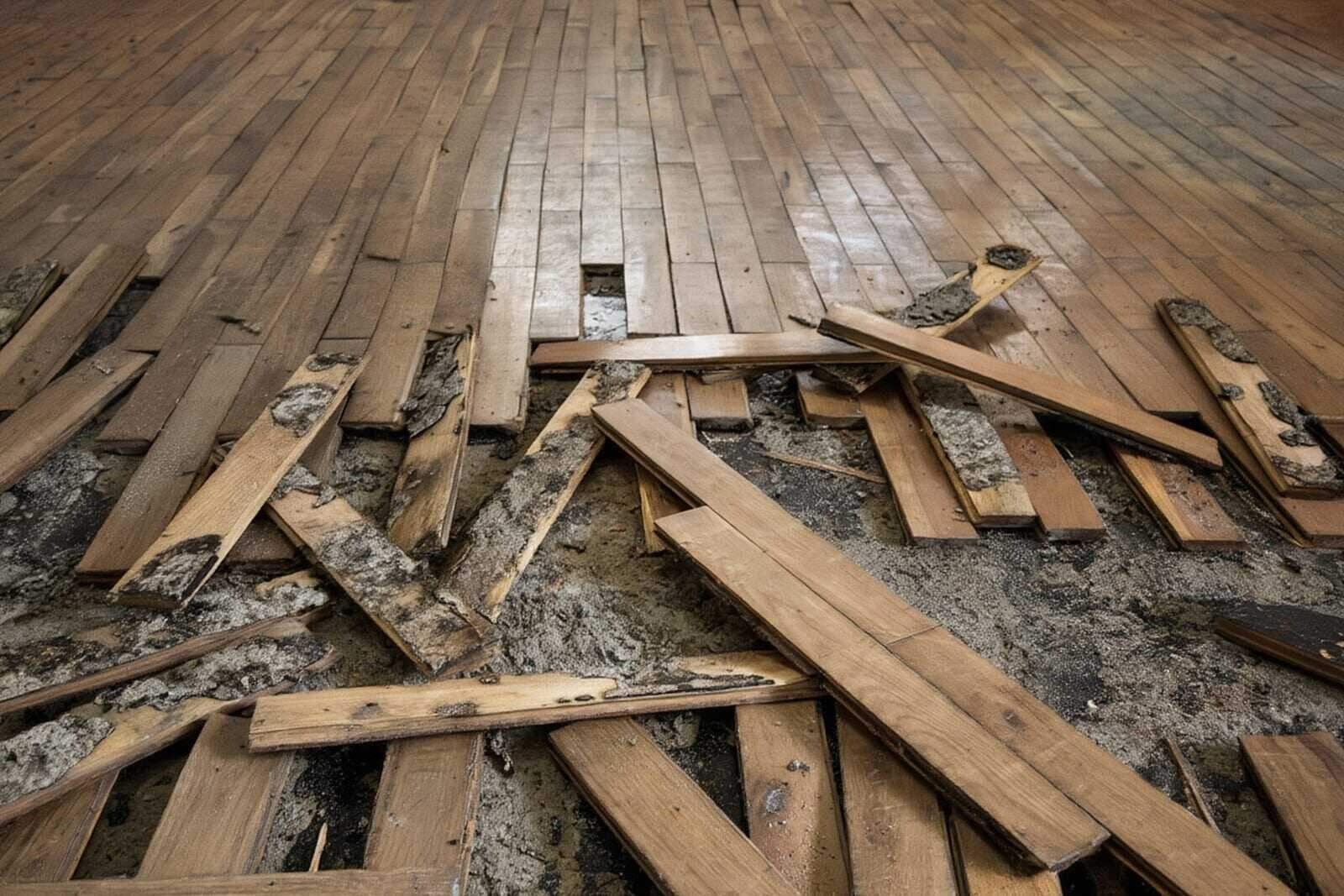
Wood absorbs water and swells, and that swelling is what deforms a hardwood floor. The shape it takes tells you how much moisture got in and how long it sat:
- Cupping
- The edges of each board rise higher than the center, giving the floor a washboard feel. It happens when the underside takes on more moisture than the top — the earliest and most reversible stage.
- Crowning
- The center of each board sits higher than the edges, the opposite of cupping. It often appears when a cupped floor was sanded flat too soon, before it fully dried.
- Buckling
- Boards lift completely off the subfloor, pulling free of their fasteners. This is the most severe stage and the hardest to reverse.
Here's the Dallas-specific wrinkle: many homes here sit on a slab, with hardwood laid over it. When a slow slab leak seeps up through the concrete, the moisture reaches the underside of the wood first — so the floor starts cupping with no spill in sight. By the time you notice the washboard ridges, water has often been wicking into the boards for days. A floor that cups from below is a classic sign of a hidden slab leak, and we trace that source before we dry, because drying a floor while it's still being fed water just wastes everyone's time. For a larger leak or burst, fast water removal comes first so the wood isn't sitting in standing water.
Can Your Dallas Hardwood Floors Be Saved?
Often, yes — and far more often than homeowners expect, if the drying starts fast. Wood that swelled with moisture can release it and return close to its original shape, especially at the cupping stage. The factors that decide it:
- How fast drying begins. This matters most. Days, not weeks — the longer the wood stays saturated, the more the cells break down and the deformation locks in.
- Solid vs. engineered. Solid hardwood swells and dries as one piece and is usually salvageable. Engineered wood is layered plywood with a thin veneer; once that bond delaminates, it generally can't be saved.
- Water category. Clean water from a supply line gives wood the best odds. Sewage or other Category 3 contamination usually means the flooring comes out regardless of how it looks.
- Buckling severity. Cupped floors dry back well; fully buckled boards that pulled free of the subfloor often need replacement.
We don't guess at this. We take moisture readings from the boards and subfloor, watch how they respond to drying, and give you a straight answer — saving a real wood floor beats replacing it, but only when the readings support it. A floor left wet too long can also develop mold in the subfloor beneath, which changes the plan.
Our Specialized Floor Drying Process
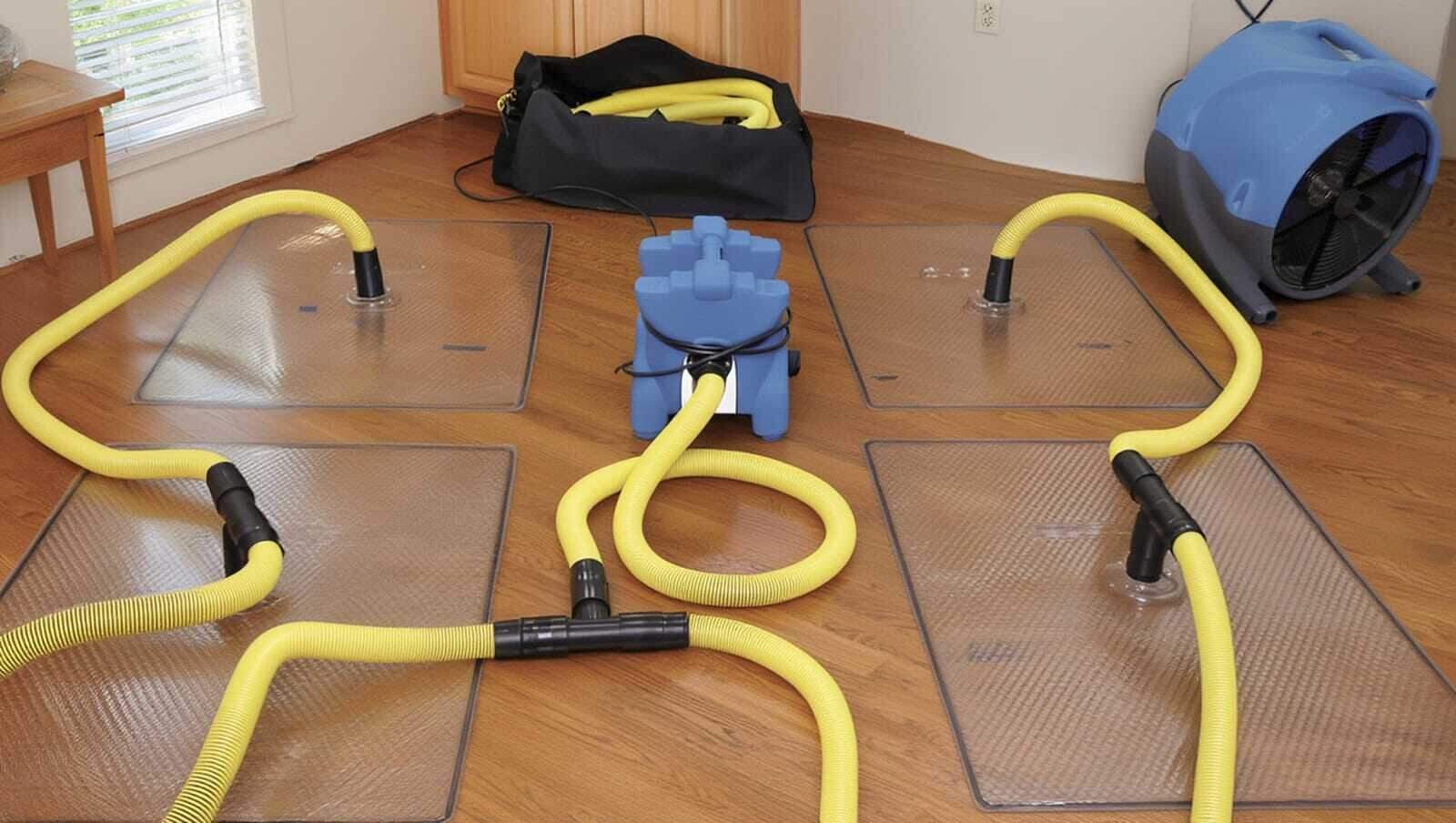
Drying hardwood isn't the same as drying carpet — air movers blowing across the top won't reach the moisture trapped beneath the boards and in the subfloor. We use a system built for wood:
Map & Stop
We confirm the source is fixed — slab leak, appliance, or burst pipe — and map the moisture in the boards and subfloor.
Floor-Mat Drying
Specialized drying mats seal to the floor and pull moisture up out of the wood and subfloor under negative pressure.
Control the Air
LGR dehumidifiers and air movers manage the room's humidity so the wood dries evenly without cracking or crowning.
Monitor & Finish
We track readings daily until the wood reaches its dry standard, then re-sand and refinish only after it's truly stable.
Floor drying is part of the broader structural drying process, and getting the wood to a verified standard before any refinishing is what prevents the crowning that ruins a too-soon sanding job.
Patience at the end is what separates a floor that's genuinely restored from one that fails again. Wood that's rushed to refinishing while it still holds moisture deep in the boards keeps moving as it dries the rest of the way, and the brand-new finish ends up over a floor that crowns or gaps a few weeks later. We hold off on sanding and refinishing until the readings sit stable for several days, not just until they hit the target once. On a slab-laid floor especially, where the concrete underneath releases moisture slowly, that final stretch of monitoring is worth the wait.
Frequently Asked Questions
Can water-damaged hardwood floors be dried instead of replaced?
Frequently, yes — especially solid hardwood caught early at the cupping stage. Wood that swelled with moisture can release it with the right drying and return close to flat, after which it's re-sanded and refinished. The two things that change the answer are time and the type of wood: engineered floors that have delaminated and fully buckled solid boards usually need replacing, while a cupped solid floor dried within days often comes back. We read the moisture and watch the response before promising either way.
How long does it take to dry hardwood flooring after a leak?
Hardwood dries slower than carpet or drywall because the moisture is locked deep in dense wood and the subfloor beneath it. With floor-mat systems and proper humidity control, expect roughly one to two weeks for the wood to reach a stable dry standard, sometimes longer for a floor that sat saturated. Rushing it — sanding before the readings say it's ready — is what causes crowning later. We monitor with meters daily and only call it dry when the numbers confirm it.
The Credentials Behind the Work


Hardwood Cupping in Your Dallas Home? Call Fast.
The sooner we start drying, the better the odds we save the floor instead of replacing it. Reach a real person on our Dallas line any time — 24/7 Emergency Response.
Call Now: (469) 895-7900