
How to Fix Water Damage Yourself (and When to Call a Pro)
Some water damage is a weekend job. A glass spilled on the floor, a small overflow caught in minutes, a damp spot under a sink you reached fast. This guide shows how to fix water damage like that yourself, step by step, and draws the honest line where doing it yourself starts to cost you more than calling someone. When that line gets crossed, SummitFrame Restore answers 24/7 Emergency Response at (469) 895-7900.
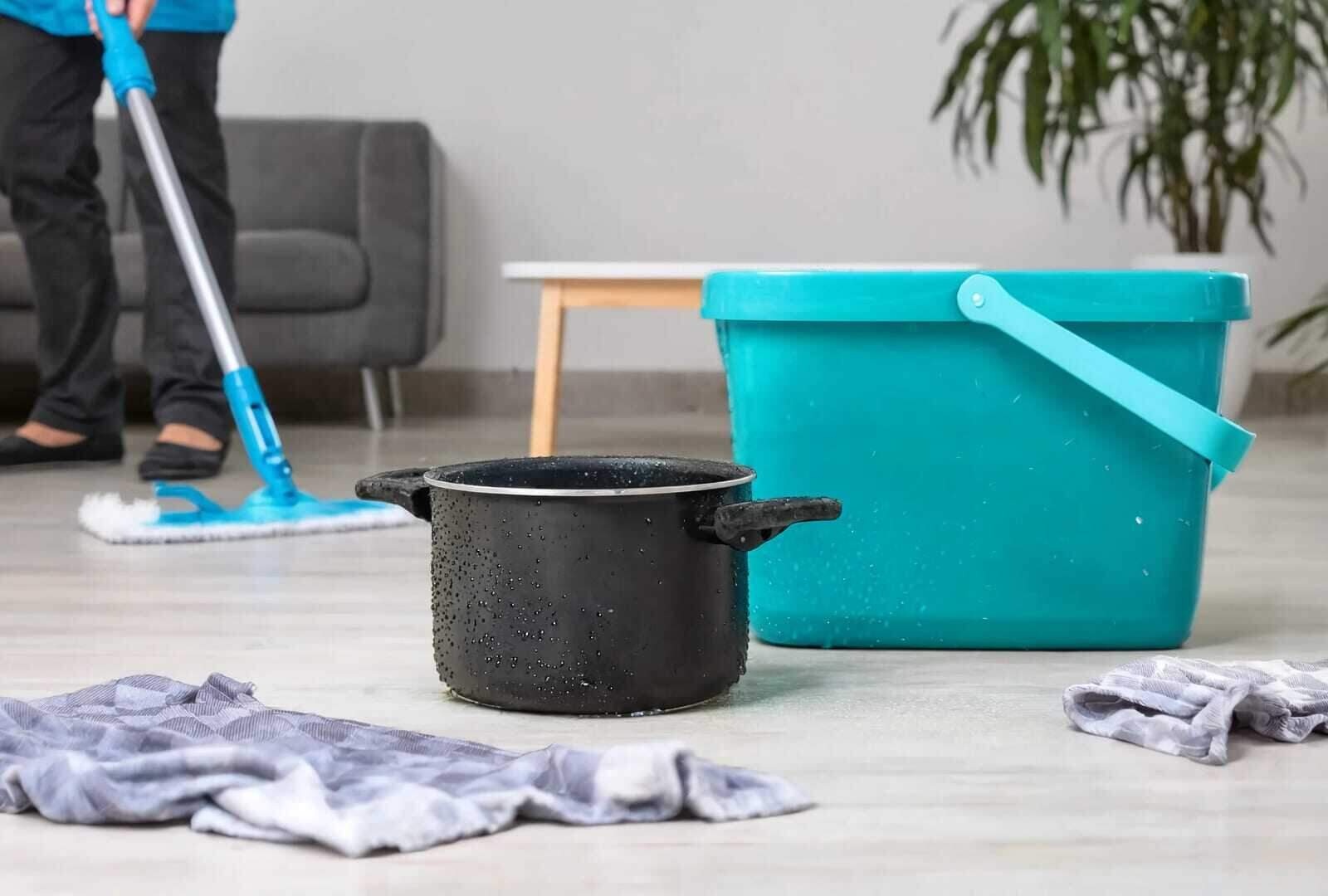
When Fixing Water Damage Yourself Is Reasonable
DIY makes sense when three things are true at once: the water is clean, the area is small, and you caught it fast. Miss any one and the calculus changes. Here's the honest checklist for a job you can handle yourself:
- The water is clean (Category 1). It came from a supply line, a faucet, a clean tank, or rainwater that didn't pool — not from a drain, toilet, or anything that sat. Category 1 water is sanitary at the source.
- You caught it within hours, not days. Water that sat more than 24 to 48 hours starts migrating into walls and growing microbes, even if it started clean.
- The footprint is small. A spill, a small appliance overflow, one damp corner. Not a whole room or a bowing ceiling.
- Nothing structural is soaked. Surface dampness on tile or sealed wood is manageable. Drywall, carpet pad, and insulation that wicked water are not, because they hold moisture you can't see or feel.
- No electrical or sewage is involved. Water near outlets, a breaker panel, or any wastewater is an immediate stop sign.
If all five hold, read on. If even one doesn't, skip to the limits below before you touch anything.
The StepsHow to Dry a Small Wet Area Yourself
Speed beats everything in water damage, so work in order and don't wait. For a small, clean spill caught early, this sequence dries most areas in two to three days:
- 1. Stop the source. Shut off the supply valve under the fixture, or the main shutoff if you can't find a local one. Water that's still arriving can't be dried.
- 2. Remove standing water. Towels, a mop, or a wet/dry shop vac. Get the visible water up before it spreads or wicks into baseboards.
- 3. Pull up anything wet and movable. Lift rugs, mats, and small furniture off the floor and out of the room. A wet rug left in place traps moisture under it and stains the floor.
- 4. Move air and pull humidity. Point box fans across the wet surface, open a dehumidifier nearby, and crack a window if the outside air is dry. Airflow plus dehumidification is how drying actually happens — not heat alone.
- 5. Check it for two to three days. Keep the fans and dehumidifier running. Feel the area daily and look for any spot that stays cool or damp longer than the rest.
- 6. Trust your nose. A musty smell that appears after a day or two means moisture is hiding somewhere you can't reach. That's the signal to stop DIY and call.
Fixing Minor Surface Damage After It's Dry
Repair comes after drying, never during. Patch a wall while it's still wet and you seal moisture inside, which is how mold and bubbling paint start. Once the area is verified dry, small cosmetic fixes are well within DIY range:
- Small drywall patches. A nick or a soft spot under a few inches across takes a patch kit, joint compound, sanding, and primer. Anything bigger than your hand, or drywall that crumbled or swelled, points to deeper saturation.
- Repaint stained surfaces. A water stain that's truly dry seals with a stain-blocking primer, then repaints. If a brown ring keeps bleeding through the primer, the surface above it isn't dry yet.
- Reseal small leaks. Re-caulk a tub, sink, or window, or snug a slow supply-line fitting. This is prevention, not restoration, and it only counts if the area behind it dried out first.
Fixing water damaged walls yourself is fine when it means patching a fist-sized hole in dry drywall. It isn't when it means tearing out a swollen panel and finding wet insulation behind it.
The Hard LimitsWhen DIY Makes Water Damage Worse
This is the section most guides skip, and it's the one that saves you money. Some water damage gets worse the longer a homeowner works on it instead of calling. Stop and call a professional the moment any of these is true:
- The water isn't clean. Gray water (Category 2, from a dishwasher, washer, or toilet overflow with no solids) carries contaminants; black water (Category 3, from sewage or a backed-up drain) is a biohazard. Neither is a mop-and-fan job. See our water removal service for contaminated extraction.
- The water sat more than a day. Past 24 to 48 hours, clean water has likely turned and moisture has reached materials you can't see. Time, not category, made the call for you.
- Drywall, insulation, or a wall cavity is soaked. These hide water behind them and dry from the wrong side. Drying them right takes containment and structural equipment, which our structural drying page covers.
- You can't measure the moisture. If you're guessing whether it's dry, you don't know. Hidden moisture in framing and subfloor is the part DIY can't reach.
- Mold is spreading. A patch under about 10 square feet is the EPA's DIY guideline. Beyond that, or growing inside walls, it needs containment so spores don't travel. That's mold removal, not bleach and a sponge.
- Anything is electrical or sagging. Water around wiring, or a ceiling bowing under trapped water, is a safety call. Leave the building if a ceiling is sagging.
Why a Pro's Moisture Meter Changes the Answer
"Dry to the touch" is not dry. A wall can feel bone-dry on the surface while the framing behind it holds enough moisture to rot wood and grow mold for weeks. That's why DIY water damage so often comes back as a stain, a smell, or a soft spot months later. A restoration crew doesn't guess: we take readings with a moisture meter and a thermo-hygrometer, set a target from a dry reference material in the same building, and dry until the numbers hit it. The IICRC S500, the industry standard for water damage restoration, defines that process: classify the water, measure it, dry to verified readings, confirm. Working by feel, a homeowner has no way to know when the structure is genuinely dry. That's the difference between a fix that holds and one that hides the problem.
Local RealityThe Dallas Angle: Slab Leaks and Clay
Two Dallas situations almost never belong on a DIY list. The first is the slab leak. DFW homes sit on expansive clay that swells and shrinks with our wet-dry swings, and that ground movement cracks the supply lines running through the foundation slab. It shows up as a warm spot on the floor, a jump in the water bill, or damp baseboards with no visible source, and the leak itself is under concrete, beyond a mop and a fan. The second is hidden cavity moisture: in our humidity a wall holds water long after the surface looks fine, and clearing it takes equipment a homeowner doesn't own. If the damage involves the slab or a wall you can't see into, treat it as a call, not a project.
Good to KnowFrequently Asked Questions
Can you fix water damaged walls yourself?
Sometimes. If the wall took clean water, you caught it fast, and the drywall is fully dry, a small patch and repaint is a reasonable DIY job. But if the drywall is soft, swollen, or stained, or the insulation behind it is wet, you can't dry that from the surface. Patching over it traps moisture and grows mold inside the cavity. At that point it's a tear-out and structural drying job, not a paint job.
How long does it take to dry out a wall?
A small, clean, surface-only wet area usually dries in two to three days with fans and a dehumidifier running continuously. A wall cavity that took on water can take longer and often needs the drywall opened to dry the framing inside. The honest answer is you don't know it's dry until a moisture meter says so — feeling the surface only tells you the outside is dry, not the structure behind it.
When is water damage too much to fix yourself?
Stop DIY the moment the water isn't clean (gray or black water, sewage), it sat more than a day or two, the area is larger than a few square feet, drywall or insulation is soaked, mold covers more than about 10 square feet, or anything electrical or structural is involved. Those aren't tougher versions of the same job — they need different equipment and contamination protocols to fix safely.
Is it worth calling a pro for a small water leak?
If it's genuinely small, clean, and caught early, you can likely handle it with the steps above. Call when you can't find or reach the source, when you smell must after a day, or when you're not sure the structure dried out. A short visit to confirm a wall is dry costs far less than reopening it months later after hidden moisture rotted the framing.
Not Sure If It's a DIY Job? Ask Us.
If the water isn't clean, sat overnight, or soaked into a wall you can't see into, that's our call to make, not yours to risk. SummitFrame Restore serves Dallas and the DFW metro, 24/7 Emergency Response, and we'll tell you straight whether you need us.
Call Now: (469) 895-7900