
Water Removal in Grand Prairie, TX
- On call around the clock in Grand Prairie and across DFW
- Licensed, insured, IICRC-certified technicians
- We log the loss and bill your carrier for you
Credentialed & on call in Grand Prairie


Truck-Mounted Water Removal for Grand Prairie Homes
The damage from standing water climbs sharply for every hour it sits. SummitFrame Restore gets it out fast with truck-mounted extractors and submersible pumps, then dries the structure to verified moisture readings — not just dry where you can feel it. Grand Prairie’s central location puts it in the convergence zone for storms tracking from either direction, and its clay soil across both county zones drives the same slab-leak risk found across older DFW neighborhoods.
- High-volume water removal for Grand Prairie losses of any size
- Extraction flows straight into structural drying — one crew
- Daily moisture checks until materials hit a dry standard
What Sends Water Into Grand Prairie Homes
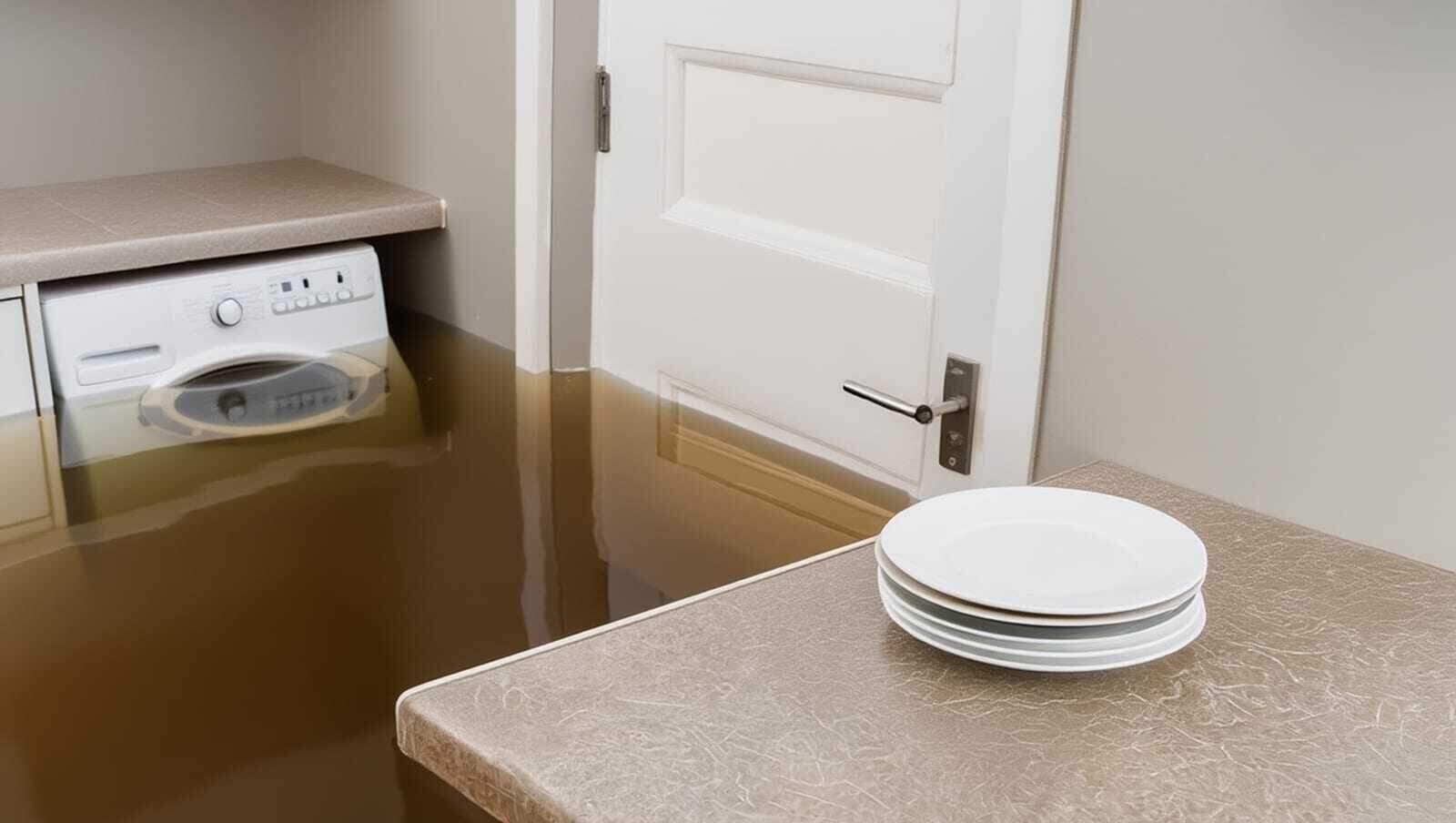
The standing-water losses that bring our extraction crew to Grand Prairie most often:
Slab leaks across mid-century neighborhoods
Grand Prairie’s older zones — Veterans Park, Dalworth Park, the sections near downtown — have copper supply lines installed in the 1950s through 1970s. Dallas and Tarrant County clay movement stresses these at the joints; a slow slab leak can saturate hardwood and carpet pads for days before showing on the surface. Slab water spreads flat and wide under the floor, so we extract beyond the visible edge and dry the subfloor.
Burst pipes in underinsulated older homes
Grand Prairie’s older homes have less pipe insulation in exterior walls than post-2000 construction. Winter Storm Uri hit mid-century Grand Prairie neighborhoods with burst-pipe losses comparable to Carrollton and Irving.
Spring hail from converging storm tracks
Positioned between Dallas and Fort Worth, Grand Prairie sits where spring storm tracks from different directions converge. The city sees multiple hail events per season — large-footprint roofs on 1970s-era ranch homes are the most vulnerable stock.
Our Water Removal Process
Stop & Assess
We find the source, stop the inflow if it’s still running, and map the wet area with moisture meters.
Extract
Pumps and truck-mounted extractors pull standing water from floors, pad, and wall cavities.
Dry
Air movers and dehumidifiers run until readings confirm materials are back to a dry standard.
Verify
We re-check moisture daily and document the readings — the same record your adjuster wants.
Why Grand Prairie Homeowners Call Us First
- Dispatched locally, any hour. Our Dallas crews are on the road to Grand Prairie quickly, and the voice on the phone is a real technician rather than a routed call center.
- Certified to the S500 standard. IICRC-trained techs work to industry benchmarks and start logging moisture readings the first hour they're on site.
- The carrier gets billed, not you. We coordinate with your adjuster and carry the claim paperwork so you aren't chasing it.
- Dry-out and rebuild, one team. The same crew that dries the structure puts it back together — nothing stalls in a handoff to another contractor.
Frequently Asked Questions
What equipment do you use to remove the water?
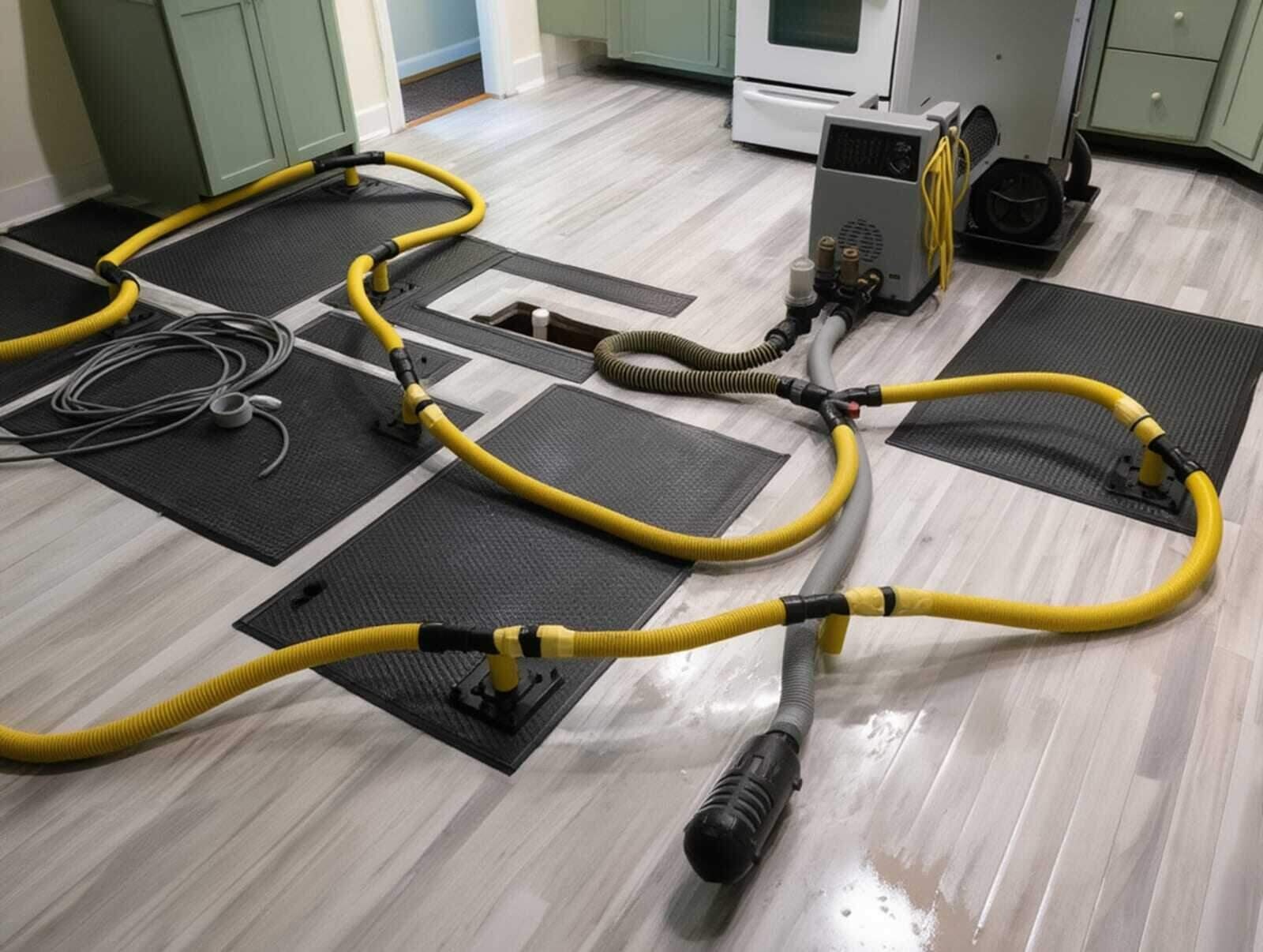
Truck-mounted extractors for high-volume removal from carpet and hard floors, submersible and trash pumps for deep standing water, and weighted extraction wands that press water up out of the pad and subfloor. Pin and pinless moisture meters plus an infrared camera find the water that hid in walls and under flooring.
Is Grand Prairie prone to slab leaks across mid-century neighborhoods?
Yes — it’s one we see regularly here. Grand Prairie’s older zones — Veterans Park, Dalworth Park, the sections near downtown — have copper supply lines installed in the 1950s through 1970s. Dallas and Tarrant County clay movement stresses these at the joints; a slow slab leak can saturate hardwood and carpet pads for days before showing on the surface. For Grand Prairie homeowners, that’s exactly the kind of source that leaves standing water to extract before it’s caught, which is why we trace and confirm the origin before we start the water removal work.
Why does water spread so far in a Grand Prairie slab-on-grade home?
Homes here sit on a concrete slab rather than over a basement, so water has nowhere to drain. It spreads flat and wide across the floor and pushes into the bottom plate of every wall it reaches. A leak that looks like a small puddle has often already traveled under the baseboards into the next room — which is why we map the full wet area before deciding what to extract.
More Ways We Help in Grand Prairie
Hardwood Floor Water Damage
Floor-mat drying to reverse cupping and save the boards.
Burst & Frozen Pipe
Freeze-event extraction and wall-cavity drying after a cracked line.
Emergency Water Damage
Same-day dispatch for burst pipes, appliance floods, and storm roof leaks.
Mold Removal
Containment, HEPA scrubbing, and clearance testing after a water leak.
Flooded Floor in Grand Prairie? We’ll Pump It Out.
Standing water deepens the damage by the hour. Our Grand Prairie crew is loaded and ready — 24/7. Call at the first sign of water.
Call Now: (469) 895-7900